What are Sanitation / Water Operator Partnerships (S/WOPs)?
A S/WOP is a cooperation capacity development program between a "mentor" utility and a "recipient" or mentee to identify and address one, or more, service delivery challenges through a 12-36-month partnership.
Mentor partners are service providers with tested innovative solutions who are willing to share their knowledge according to their priorities and interests. Recipient partners are those seeking to learn and adopt new or improved practices to advance their service delivery abilities.
A partnership is framed on the basis of alignment between a mentee utility's priority needs and the specific strengths of the mentor. Once a partnership is formally established, partners jointly develop a work plan detailing specific commitments, activities, resources, timelines, and outcomes over the partnership period. Activities include technical consultations, specialized on-the-job training, technology demonstrations, peer review of procedures and systems, and information exchange.
WaterLinks connects mentors and mentees according to their interests, capabilities, and needs, and offers facilitation support to help ensure the successful implementation of partnership activities and meet targeted outcomes.
How Do S/WOPs Work?
Catalysts for Utility Performance
S/WOPs act as catalysts for improving utility performance by fostering sustained peer-to-peer engagement. Through direct collaboration and practical knowledge exchange, service providers can address specific operational challenges and strengthen key performance areas. These provide the foundation, in most cases, for scaling up investments to improve performance.
Structured Mentorship and Knowledge Exchange
S/WOPs are typically implemented over a 12-36 month period based on time required to address each of the identified issues. These partnerships include technical assistance, on-the-job training, technology demonstrations, peer reviews, and systematic information exchange. Depending on the length and scope of the partnership, mentor visits are organized once a year. Technical training sessions are conducted during this period as well as field visits to pilot areas to review previously agreed actions. A mentee visit is organized once during the partnership period usually at the early stage of the partnership to enable the mentees obtain a first-hand view of good practices in utility operations.
Mutual Benefits and Shared Standards
S/WOPs generate shared value by enabling recipients to improve operations and expand services while mentors enhance their expertise and advance sustainability objectives. All partnerships supported by WaterLinks follow established principles and guidelines to ensure consistency, accountability, and lasting impact.
Work Areas
WaterLinks has identified the following priority work areas for S/WOPs:
Septage Management
Improving end-to-end septage and sludge management systems-from collection and transport to treatment and disposal-using environmentally compliant and community-safe practices.
Non-revenue Water Management
Implementing network analysis, DMA design, leak detection, pressure management, and metering strategies to reduce physical and commercial losses, improving system efficiency and long-term sustainability.
Climate Change Adaptation
Designing climate-resilient utility strategies that address flooding, drought, extreme weather, and resource variability through risk assessments and adaptive infrastructure planning.
Customer Relations
Strengthening customer service processes, feedback channels, and community engagement to build trust, improve satisfaction, and enhance service delivery transparency.
Regulation of Water and Sanitation Services
Supporting utilities and local governments in establishing regulatory frameworks, compliance mechanisms, and performance standards that ensure safe, reliable, and equitable water and sanitation services.
Partnership Facilitation Process
Key organizations involved in a S/WOP are service providers, partnership facilitators, and development partners. S/WOP facilitators, like WaterLinks, are organizations that provide technical assistance and coordination support in the development and implementation of S/WOPs, usually under contract or with funding assistance from a development partner. Development partners are donor agencies, international organizations, private corporations, foundations, water associations, and non-profits that provide funding and technical support to S/WOPs.
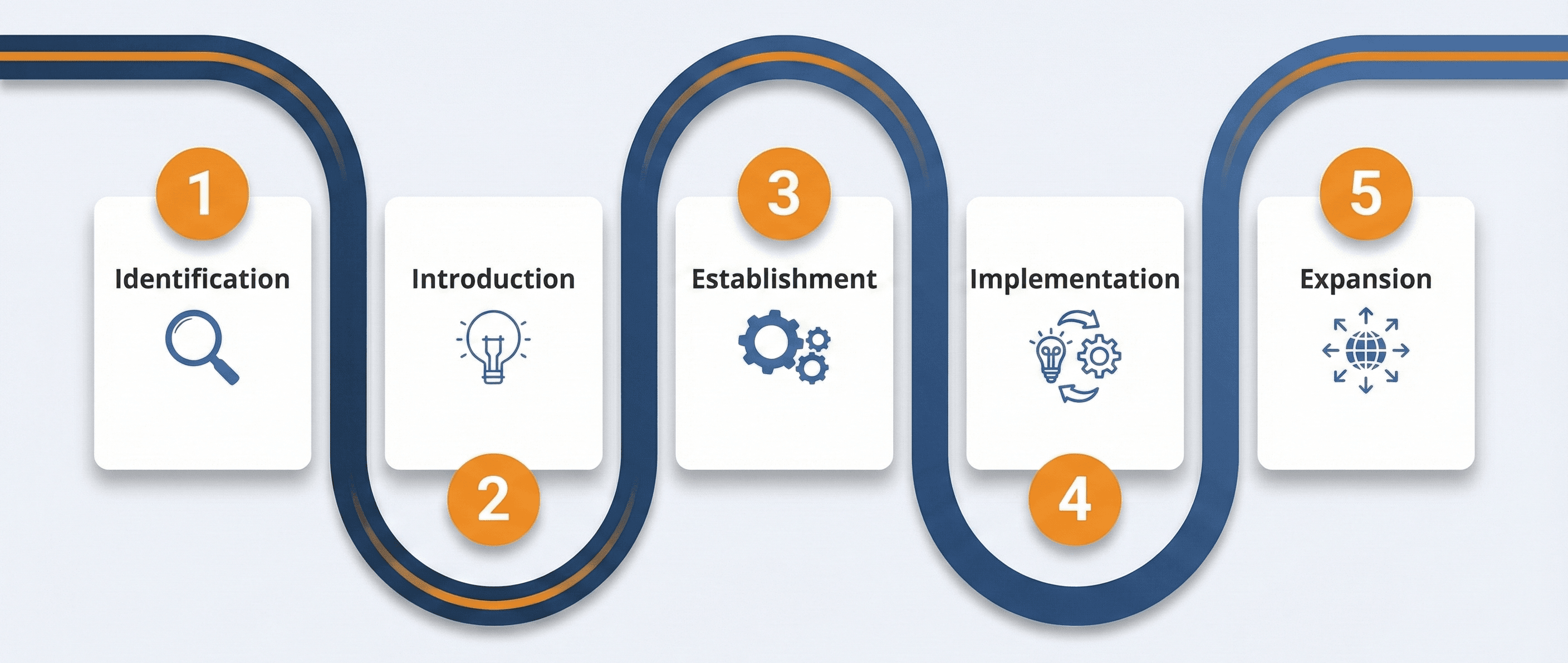
You may find a summary of the Water Operators Partnership Facilitation Guidelines here.
.JPG&w=750&q=75)